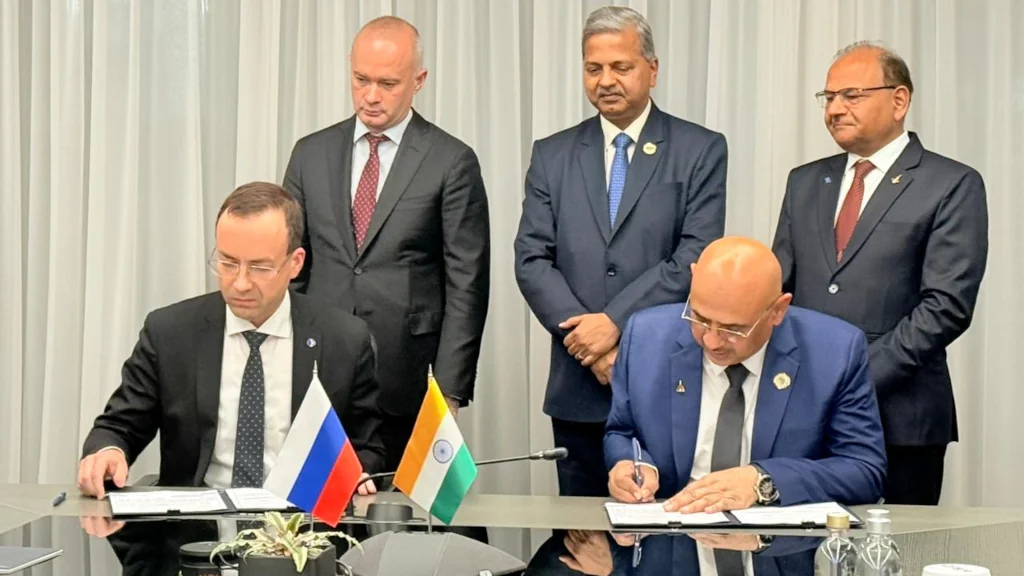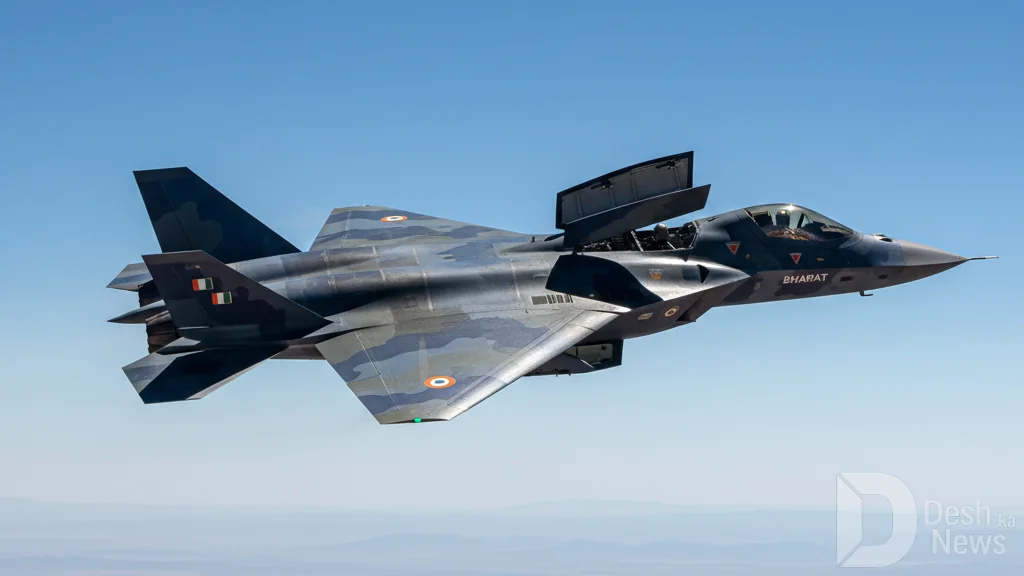
In a high-stakes manoeuvre set to redefine India’s aerospace landscape, Adani Defence & Aerospace has reportedly teamed up with Hyderabad-based MTAR Technologies. Their mission? To clinch a formidable ₹15,000 crore contract for developing and manufacturing the prototype of India’s indigenous fifth-generation stealth fighter, the Advanced Medium Combat Aircraft (AMCA).
This strategic, albeit unannounced, alliance, which surfaced in reports around October 12-13, 2025, pits the duo against a roster of established giants, all vying to contribute to one of the Indian Air Force’s most ambitious projects.
The Quest for India’s Own Stealth Jet
The AMCA program is India’s answer to self-reliance in advanced military aviation, aiming to produce a cutting-edge stealth fighter. The Defence Research and Development Organisation (DRDO) completed the design work in 2023, with a ₹15,000 crore approval for prototype development received from the Cabinet Committee on Security (CCS) in March 2024. The first prototype is expected to roll out in approximately three years, with its maiden flight anticipated in late 2028 or 2029. Ultimately, the Indian Air Force is projected to induct around 126 aircraft across seven squadrons, with series production slated to begin by 2035.
A Partnership Forged in Precision
MTAR Technologies brings to the table a rich legacy of precision engineering. With a market capitalization of approximately ₹5,797 crore and a revenue of ₹704 crore, the company has been a critical supplier of high-precision components, subsystems, and systems for India’s strategic programs in nuclear, space, and defence sectors. Its impressive clientele includes the Indian Space Research Organisation (ISRO), the Defence Research and Development Organisation (DRDO), and the Nuclear Power Corporation of India. MTAR’s components have powered missions like Chandrayaan-2 and Mangalyaan, and its complex assemblies are integral to DRDO’s Agni missile series. Crucially, its expertise in cryogenic and high-temperature alloys is a game-changer for the AMCA, which demands lightweight, radar-absorbent materials and advanced thermal management for its stealth capabilities.
Adani Defence & Aerospace, a key arm of the Adani Group, has rapidly expanded its footprint in the defence sector since 2019. The company aims to foster indigenous capabilities through strategic collaborations, building a resilient network of defence and aerospace solutions. While Adani Aerospace And Defence Limited’s standalone operating revenue was under ₹1 crore for the financial year ending March 31, 2024, the broader Adani Defence Systems and Technologies Limited (ADSTL) reported a total operating income of ₹625 crore in FY24, with estimated revenues to more than double in FY25. This collaboration aligns perfectly with the ‘Atmanirbhar Bharat‘ initiative, pushing for self-reliance in critical defence technologies.
The Race Heats Up
The Aeronautical Development Agency (ADA), responsible for the AMCA program, had floated an Expression of Interest (EoI) in June to shortlist Indian companies for prototype development, flight testing, and certification. The deadline for submissions was September 30, and at least seven companies or consortiums have responded. Besides the Adani-MTAR consortium, other significant contenders include Hindustan Aeronautics Limited (HAL), Tata Advanced Systems (TASL), Bharat Forge, Larsen & Toubro (L&T), Axiscades Technologies, Goodluck India, and BrahMos Aerospace. This intensified competition underscores the private sector’s growing role in India’s defence manufacturing, a shift encouraged by the government to accelerate indigenous capabilities and reduce import dependency.
A Self-Reliant India
This partnership is more than just a bid for a contract; it’s a testament to India’s burgeoning private defence sector stepping up to the challenge of advanced aerospace manufacturing. The AMCA project is a critical component of India’s long-term strategic defence planning, aiming to equip the Indian Air Force with a domestically produced, cutting-edge fighter jet. The success of such collaborations will not only enhance India’s defence capabilities but also position it as a global player in advanced military technology. As the government intends to shortlist two private players to co-own the development process alongside HAL, the Adani-MTAR consortium could be a formidable force in this endeavour.
Follow DeshkaNews on X (Twitter) to receive updates on the latest post.