India’s push for a greener future just got a major boost in the Northeast! Prime Minister Narendra Modi recently inaugurated and laid the foundation for a massive ₹18,000 crore clean energy and development initiative in Assam. This isn’t just a single project; it’s a collection of projects with a strong focus on self-reliance and harnessing local resources.
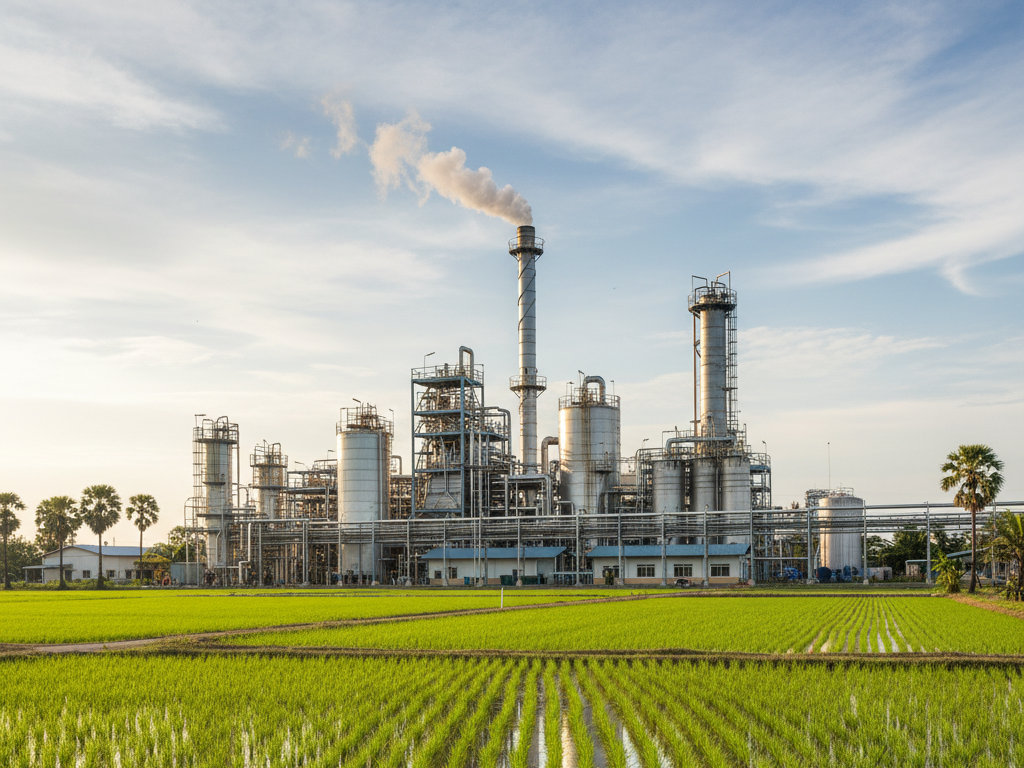
At the heart of this initiative is a new bamboo-based bioethanol plant at Numaligarh Refinery Limited (NRL) in Assam’s Golaghat district. This is a game-changer because it’s the world’s first plant to produce second-generation bioethanol from bamboo. While the plant has been inaugurated, it is part of a larger plan to strengthen Assam’s energy sector. The entire initiative is part of India’s long-term strategy to reduce dependence on foreign crude oil and gas imports.
Assam was chosen for this ambitious project for a very strategic reason: its rich natural resources, especially bamboo. The state is abundant with this fast-growing plant, which provides a sustainable and renewable raw material for the bioethanol plant. By leveraging this local resource, the project aims to create a circular economy where farmers and tribal communities can supply bamboo, thus boosting the regional economy. This also aligns with the government’s recent decision to remove restrictions on cutting bamboo, making it easier for communities to benefit.
The project will be a huge win-win for both the economy and the environment. Firstly, it will directly benefit farmers and tribal communities in Assam by creating a steady demand for bamboo and providing them with a new source of income. The government plans to support local farmers in bamboo cultivation and will also set up smaller chipping units in the region, pumping approximately ₹200 crore annually into the local economy.
Beyond the immediate financial benefits, the bioethanol plant will help reduce India’s reliance on fossil fuels, contributing to a significant reduction in carbon emissions. The projects will also strengthen the ‘Make in India’ initiative, promoting industrial growth and creating new job opportunities in the state. Additionally, a new polypropylene plant, which is also part of the ₹18,000 crore project, will boost the manufacturing of everything from medical kits to textiles.
This Assam project is a perfect example of India’s broader push for clean energy. The country has set ambitious goals to become a global leader in green energy and achieve net-zero emissions by 2070. As part of its commitments under the Paris Agreement, India aims to get 50% of its total electricity from non-fossil fuel sources by 2030. Key government initiatives like the National Green Hydrogen Mission and schemes like PM-KUSUM for farmers and PM Surya Ghar for households are all part of this massive effort. India’s installed non-fossil fuel capacity has already grown to 250 GW, positioning it among the top five countries globally in solar energy capacity. The Assam project is a key step in this national mission, showing how local resources can play a big role in achieving a cleaner, more self-reliant energy future for the entire country.