The Ministry of Heavy Industries (MHI) has announced a major update to its localization mandates under the PM Electric Drive Revolution in Innovative Vehicle Enhancement (PM E-DRIVE) Scheme, a crucial move that will provide significant breathing room for manufacturers of electric trucks and buses. With an impressive outlay of ₹10,900 crore running through March 31, 2026, the scheme aims to supercharge India’s green mobility push.
The Motor Magnet Localization Conundrum Solved
The biggest hurdle for heavy EV makers—the mandatory domestic production of traction motors containing magnets—is finally seeing a pragmatic solution.
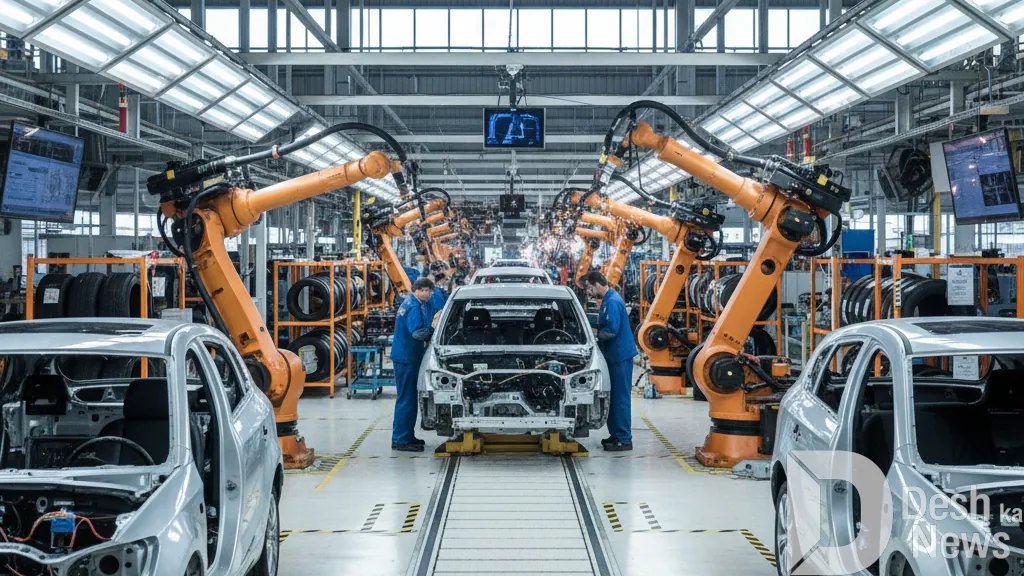
Under the stringent Phased Manufacturing Programme (PMP), EV manufacturers must perform core assembly steps domestically to qualify for subsidies. Specifically, for the traction motor, the guidelines explicitly mandate local activities such as coil winding, rotor/stator assembly, and importantly, magnet fitment within India. This was intended to build a deep domestic supply chain.
However, the permanent magnets essential for these traction motors rely almost entirely on rare earth materials (like Neodymium and Dysprosium) imported primarily from China. Recent global supply chain disruptions made it nearly impossible for Indian manufacturers to source the raw magnets while still adhering to the local fitment requirement.
Recognizing this practical difficulty, the MHI is now planning to allow electric truck and bus manufacturers to import traction motors that are already fitted with rare earth magnets without losing the lucrative PM E-DRIVE incentives. This is a game-changer, giving companies the flexibility to utilize high-quality, fully assembled magnet-containing motors from global sources while domestic rare earth processing scales up.
E-Trucks Get Dedicated Incentives
The PM E-DRIVE Scheme has officially extended its focus to heavy commercial vehicles, with dedicated guidelines for e-trucks (N2 category: 3.5–12 tonnes and N3 category: 12–55 tonnes GVW) notified on July 10, 2025.
These incentives are designed to make e-trucks cost-competitive, offering a subsidy that is the lowest of three parameters, including a maximum of ₹5,000 per kilowatt-hour (kWh) of battery capacity or 10% of the ex-factory vehicle price. To claim this, OEMs must also ensure the scrapped vehicle is an old ICE truck of equal or higher GVW.
The policy also enforces a clear timeline for other key power electronics: the domestic production of integrated traction motors and inverters is mandatory starting March 1, 2026.
This combination of pragmatic localization easing on critical magnet supply and strong financial incentives ensures that India’s push for self-reliance (Atmanirbhar Bharat) in EV manufacturing continues, but without sacrificing the speed needed to adopt green freight transportation.