If you’re an Indian car buyer, the mid-size SUV segment has only one true king: the Hyundai Creta. Despite a horde of rivals, the Creta and its cousin, the Kia Seltos, continue to capture the lion’s share of sales.
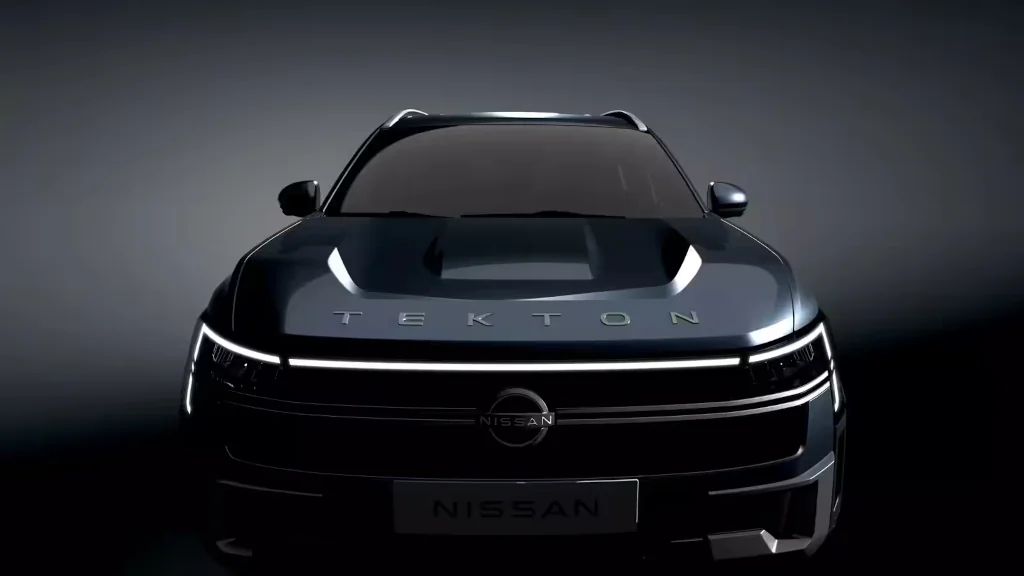
Now, Nissan is throwing its hat back into the ring, and this time, it’s not holding back. The Japanese automaker has officially unveiled the design sketches and name of its crucial new C-segment SUV: the Nissan Tekton. Positioned squarely against the Creta, this model is the centerpiece of Nissan’s resurgence strategy in India.
What is the Tekton and When is it Launching?
The Nissan Tekton, a name derived from the Greek word for “craftsman” or “architect,” was recently previewed, confirming its place as the brand’s next major launch.
- Launch Timeline: The Tekton is scheduled to be launched in India in the second quarter of 2026.
- Platform: It will be built on the Renault-Nissan Alliance’s modular CMF-B platform, the same one underpinning the upcoming next-generation Renault Duster.
- Production: Like the successful Magnite, the Tekton will be manufactured at the Renault-Nissan Alliance plant in Chennai for both the domestic market and export to select global markets under the “One Car, One World” strategy.
The Why: A Bold Design Inspired by the Patrol
The biggest talking point is the Tekton’s design DNA. Unlike some of its contemporary, curvy rivals, the Tekton draws heavily on Nissan’s iconic, terrain-conquering flagship SUV, the Nissan Patrol.
The design sketches reveal a bold, boxy, and upright stance:
- Front: A powerfully sculpted bonnet, a signature V-motion grille, and C-shaped LED light signatures that connect via a light bar.
- Styling: Muscular wheel arches and a subtle ‘Double-C’ motif on the front doors—a claimed nod to the Himalayas—lend it a rugged character, a clear distinction from the softer lines of the Creta.
- Powertrain: While details are under wraps, the Tekton is expected to feature a petrol-only lineup, likely including a 1.3-litre turbo-petrol engine and possibly hybrid options for higher trims, giving it the competitive muscle required in this segment.
Nissan’s Do-or-Die Strategy
The launch of the Tekton is arguably the most important event for Nissan India since the debut of the Magnite, which currently accounts for the bulk of its domestic sales volume.
The mid-size SUV segment (including the Hyundai Creta, Kia Seltos, and Maruti Grand Vitara) is the fastest-growing and most profitable category in India. Nissan needs a strong product here to:
Gain Scale: The Tekton is positioned in the Rs 10–20 lakh (ex-showroom) price bracket, which is the heart of the Indian car market.Expand Reach: As part of this renewed push, Nissan plans to aggressively expand its dealership network from 160 outlets to 180 by the end of FY 2025-26, enhancing customer accessibility for both sales and service.Future Pipeline: The Tekton is one of three new models planned, followed by a sub-4 metre MPV in early 2026 and a 7-seater SUV in 2027, signalling a long-term $600 million commitment announced by the Alliance.
The Bigger Picture
The Tekton will enter a segment that is going to be incredibly crowded by mid-2026. Not only will it face the established dominance of the Creta (which sells over 12,000 units monthly), but it will also battle its platform twin, the highly anticipated Renault Duster, along with other strong contenders.
Nissan’s strategy—leading with a distinctive, rugged design inspired by its global SUV legacy—is a smart move to carve out a niche. If the company can price the Tekton competitively, load it with features like a panoramic sunroof and ADAS (Advanced Driver Assistance Systems) as speculated, and ensure high quality, it just might pull off the same disruptor move that the Magnite did in the compact SUV space. The market awaits to see if the ‘craftsman’ can design a win for the Japanese brand.
Follow DeshkaNews on X (Twitter) for updates on the latest posts.